Sunday, October 31, 2010

Music Review: "Intriguer" by Crowded House (2010)


Crowded House “Intriguer” (Concorde Music Group 2010) picks up where their 2007 release of “Time On Earth” left off with a similar approach of introspective lyrics and solid output of sound.
Finn is one of those musicians who always has his finger in a stew of collaboration and always working in his Roundhead studio in Auckland, New Zealand. Over the years, Finn has been known to collaborate with an endless list of list of notable musicians, surrounding himself with many of the artists he enjoys and can feed off such as members from Wilco, Radiohead, Eddie Vedder and Johnny Marr from Cure fame.  The choice of adding Mike Hart on backup keys, vocals and guitar and Matt Sherrod on drums has given the group a solid foundation to create the quality of sound that Finn has been arranging through his solo days and collaboration with others.
Always the lyricist and creative instigator, Finn matches the mood of his songs with his talented band mates by creating rich and layered songs that will pique interest in his songwriting to new listeners. The band’s musicianship elegantly shines, adding depth and clarity to the backing vocals and sound effects with the help of producer Jim Scott who has worked with the likes of Radiohead, Wilco and earning a Grammy producing “Californication” by the Red Hot Chili Peppers.
The latest release adds 16 news songs to the many ranges of style that the Crowded House catalogue has amassed over the years. Additional material on the Deluxe copy of the album includes a DVD of videos recorded in Finn’s home and some show material at Auckland Town Hall in Finn’s homeland of New Zealand. Fans of the Crowded House will be happy to see a live version of one of the oldie but goodies, “Don’t Dream (It’s Over)” and Neil donning a debonair new stash.
Finn gets everyone around him involved, adding the usual suspects of special guests to the mix including Finn’s son Liam and his wife Sharon who add guitar and background vocals respectively on “Isolation” – a song with warm and echoing voices surrounded by fluttering organ keys which ends by bursting into a high pitched chaos.
“Amsterdam” saunters through the streets, taking the listener on a slow and plodding jaunt and leaving the listener with a bad taste in their mouth and a sense of paranoia with lyrics: and the rain came hard / a million people on a protest march / every choice, every path was mistaken”.
The slow pace of the song puts a damper on the mood, setting the stage in a torrential downpour of emotion, shaking things up with a certain sense of uncertainty with fluttering organ keys. Finn paints the setting as a place where no one can be trusted, even the storyteller on the song; “every temptation, and device / all the diamonds and the spice / I would give anything for the sight of an honest man”.  
The familiar Crowded House-esque standards can hook the listener in on such revelatory and chipper songs like “Twice If You’re Lucky” which starts off with beautiful keyboard melodies and harmonies with keyboardist Hart, reminiscent of the range of Finn’s brother, and ex-Crowded House member, Tim Finn. Songs like “Archer’s Arrow”, with fluttering keys may even resemble those on “Private Universe,” a song from the group's fourth studio album Together Alone.
Although “Intriguer” flows with beautiful music and lyrics, the moodiness of the songs can seem unrelenting, but this album is worth listening to a few times to catch the subtle and amazing craftsmanship that Finn (and now Crowded House) are known for.

Tuesday, October 19, 2010

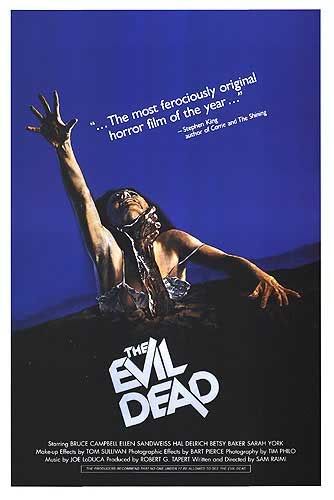
Movie Review: "Evil Dead" (1981)

Once again it's Halloween season and if you're looking for an outrageous 80's B-rated horror flick, take a look way back to the old horror cult classic "Evil Dead" (1981) – Sam Raimi's debut full-length feature film in which he takes on the role as as writer, producer, choreographer and special effects guy.

Before he directed the "Spiderman" trilogy and "Drag Me To Hell" Raimi gained cult notoriety in the movie biz by creating the trilogy of “Evil Dead” stories,  "Evil Dead II" (1987) and "Army of Darkness" (1993) which revolve around the shotgun and chainsaw wielding, demon-killing hero Ash played by Bruce Campbell – Raimi's childhood friend and executive producer of the movie.

Raimi's love for film and shows early on in his career through every frame of this movie which was brought to life with the help of friends, family and investors. As each scene in the movie progressively gets more and more absurd in the level of gore through special effects,  

"Evil Dead" starts out as the typical T & A horror movie filled with the usual camp of blood and demons, no-name actors and actresses dressed in the 80's garb with bad 80’s hair, and the  theatrical silliness that stems from the long line of "don't go out there / in there" horror plots. All of this, of course, preempted by creaky floors, high winds and demon noises lurking outside in the dark and creepy woods. What makes this horror movie stand out from the slash and gash movies of yester-year, is the attention to cinematography.

As in most horror flicks, curiosity is what kills the character. Ash discovers an artifact that cabin's owner has left in his basement. And so Ash quickly discovers a reel-to-reel tape player in the dungeon-esque basement of the cabin. Soon after playing the “incantations that allow the demons to posses the living” from the "Book of the Dead", the evil spirits stir in the woods that surround.

Raimi’s creates this roaming evil presence by simply attaching a camera to an ATV and cruising through a forest, zooming up at ground level and leading up to the entryway of the cabin. A simple dolly shot in film-speak. But, this is one of Raimi's many signature film techniques that can be accredited to his style and craft.

The ‘camp du Raimi’ is so absurd, it is notably different from any other horror film of that era, and thus much more entertaining. Raimi relentlessly pulls out every trick in his hat with incredible attention to detail with his unorthodox framing and dolly shots, quick cut editing, and choreography of all the multitude of stunts and gags in the film. Raimi and his special effects gurus take every chance they can get to squeeze out another angle to reveal a version of a latex demon with its eyes bulging out and skin falling off; blood and puss oozing from each gash or blown out of an orifice from its disjointed and mutilated carcass; ghouls and demons flailing themselves at the hero, only to be hacked into parts and shown flinching on the floorboards below in a pool of blood and bits. It’s absurd, it’s cheezy and it’s totally hilarious.

As mentioned before, he also received some help from a budding movie personality during that time – a young Joel Coen, who lends a hand on this film as assistant film editor, well before he went on to establish his cult status in film. Along with the addition of Bruce Campbell’s moxie as a leading actor via his physical comedic relief with his classic expressions, it just goes to show why every part of this movie came together and became a cult-classic low-budget film. Raimi’s craft is what makes this movie so enthralling. It is these qualities rather than the simple plot that makes this absurd horror movie shine over the years.

Monday, October 11, 2010

Another Novelty Office Show?

“Outsourced”, the newest addition to NBC’s Thursday night lineup – Thursdays at 8:30 p.m. – strives to stay afloat amongst this Fall’s lineup of comedy with it’s social humor of the culture clash of East meets West.  

As the opening credits roll, the soundtrack of the show fills an American living room with the foreign sounds of Indian music, something Americans in some select areas may not be used to. The opening credits are similar to a Bollywood production - chock full of grungy posters and Hindi music that is refreshing and energetic.

           The show is set overseas, in a call center for Mid America Novelties, a novelty mail-order company, located in Mumbai, India.  The setting of the show is beautiful and interesting, as it puts the viewer in the office where the windows peer out into the day-to-day life of the bustling cityscape of Mumbai. The set is filled with a sea of extras going about their day, filled with street vendors carting around their wares and foodstuffs, to sacred cows passing by. One may smell the curry outside the walls of this unique office area.

           The writing of the show shows promise, if one can look past the usual clichés of the laughs pointed at the brogue of the east. The show does attempt to point out the major differences in cultures by showing the audience there is more at play than just the usual American simple-minded social commentary.


In the show’s second episode, “Measure of a Manmeet,” Todd Dempsy, played by Ben Rappaport, has been transplanted into a foreign land where he feels the need to connect with the culture of his employees while struggling to keep his job at the same time. Todd has been instructed by his boss to give performance reviews to each of his employees. He later finds that he has to perform evaluations of his employees, and give the axe to the ones who don’t produce enough sales.


The likable character of Todd as the open-minded and culturally aware manager from Kansas City thrives to understand his employees and struggles with figuring out the eastern culture. The topic of social class and pre-arranged marriage is placed in this episode.


Todd learns that one of his employees, Manmeet, played by Sacha Daiwhan has been taking every opportunity to connect with the female callers looking for novel items by flirting with them. Instead he finds himself getting lost in the conversations he has and the relationship he makes with women from as he puts it, “exotic places Des Moines, Fresno, Chattanooga.”


Once his cover has been blown and his job is at risk, Manmeet confides in Todd about his actions, telling him the casualness of American women gives him the confidence that he finds is lacking at home here in Mumbai. As it turns out, these conversations with his “girlfriends” makes him feel that he doesn’t have to worry about such class struggles as his caste, or what his father does for a living when talking to a person of the opposite sex.


Having the tables turned on the American, and putting Todd’s character on the other side of having to figure out the culture of the East is a welcome and refreshing twist on Thursday night television.

           Another highlight of the show is in the comic relief and tightly wound viewpoint the culturally clueless Charlie Davies character, played by Diedrich Bader. Todd can be found confiding in Charlie during his lunch breaks, giving him advice about how to deal with his troops overseas. But the wit of his conversations usually show the callousness that comes with men who live in caves – the type of American who has never tried a cuisine other than a Lean Cuisine purchased in the frozen section of the local grocer.

While the shows writing can show glimpses of promise, brought to life with the great performances by a mostly Southern Indian cast, most of the laughs can be rooted in laughing at the Indian culture and the way that they speak and their lack of intelligence in all things Americana - which the writing seems to lean on. Then again, NBC’s Thursday night lineup mostly consists of the back-asswardness, mindless, unethical and yet, loveable characters on such shows as “The Office,” “30 Rock,” and “Community.”

The timing of this new show may be appropriate – as more and more American-based companies are turning to the more cost-effective route of outsourcing customer relations to overseas locales. But, the timing of the cliché jokes can be rather heavy handed in the eyes of the viewers during such times of unemployment.

Monday, October 4, 2010

Another Novelty Office Show?


NBC’s newest addition “Outsourced” strives to stay afloat in Fall season’s sea of comedy with it’s social commentary and culture clash of East meets West.  

The opening credits are similar to a Baliwood production - chock full of grungy posters and Hindi music that is refreshing and energetic. The soundtrack of the show fills an American living room with the foreign sounds of Indian music - something Americans in some select areas may not be used to. At the end of once scene in the show, a haunting Hindi rendition of Devo’s “Girl You Want” can be heard trailing into a commercial break.

“Outsourced” brings the “Must-See TV” audience, Thursdays at 8:30 p.m., into the call center for Mid America Novelties located in Mumbai, India. The setting of the show is beautiful and interesting -- as it puts the viewer in in office where the windows peer out into the day-to-day life of the bustling cityscape of Mumbai. The set is filled with a background of extras who are going about their day -- from sacred cows walking the streets to street vendors carting around their wares and foodstuffs -- you can smell the curry outside the walls of this office area.

The writing of the show shows promise, if one can look past the usual clichés of the culture clashes. The show does attempt to point out the major differences in cultures by showing the audience that there is more at play than just the usual American commentary.

In the shows second episode, “Measure of a Manmeet”, Todd Dempsy (played by Ben Rappaport) has been transplanted into a foreign land where he feels the need to connect with the culture of his employees while struggling to keep his job at the same time. Todd has been instructed by his boss to give performance reviews with each of his employees. He later finds that he has to perform evaluations of his employees, and give the axe to the ones who don’t produce enough sales numbers.

Manmeet, played by Sacha Daiwhan, has been taking the opportunity to connect with the female callers looking for novel items by flirting with them. Instead he finds himself getting lost in the conversations he has and the relationship he makes with women from as he puts, “exotic places Des Moines, Fresno, Chattanooga”. Once his cover has been blown, and his job is at risk, Manmeet confides in his manager about the social norm of pre-arranged marriage in his cultural stating that he doesn’t have to worry about his caste, or what his father does for a living.

While the likable character of Todd as the open-minded and culturally aware manager thrives to understand his employees and work at figuring out their culture and how to manage them, the viewpoint of the tightly wound and culturally clueless Charlie Davies character -- played by Diedrich Bader -- a call center manager at another American-based company, adds some more comic relief in terms of bringing the audience back to norm.

Charlie can be found giving Todd advice about how to deal with his people during his lunch breaks. But the wit of his conversations usually show the callousness that comes with men who live in caves -- the type of American who has never tried a cuisine other than a Lean Cuisine purchased in the frozen section.

As Todd shows his concern about having to cut a member of his team loose, Charlie seems to draw the line between inter-office relationships. He says to Todd, “You’re too close to your employees. Guys who work for me, I don’t even know their names.”

Charlie then goes on to point at his members from across the lunchroom rattling off his nicknames for the guys in the office, “..there’s Indy, wore a hat to work one day. And there’s Roger Ebert.”

Todd replies, “He looks nothing like Roger Ebert!”

Charlie then says, “Watch this” and waves to the man. The man responds by giving Charlie two thumbs up.

While the shows writing can show glimpses of promise, brought to life with the great performances by a mostly Southern Indian cast, most of the laughs can be rooted in laughing at the Indian culture and the way that they speak and their lack of intelligence in all things Americana - which the writing seems to lean on but not fully stick with. But then again, NBC’s Thursday night lineup mostly consists of the back-asswardness that seem to make America entertained -- the mindless and unethical characters that are loved on such shows as “The Office”, “30 Rock” and “Community”.

The timing of this new show may be appropriate -- as more and more American-based companies are turning to the more cost-effective route of outsourcing customer relations to overseas locales. But, the timing of the cliche jokes can be rather heavy handed in the eyes of the viewers during such times of unemployment.

Having the tables turned on the American, and putting Todd’s character on the other side of having to figure out the culture of the West is a welcome and refreshing twist on Thursday night television, while still keeping it fresh.

Sunday, September 26, 2010

Who's Listening Anyway?

Anne's Approach
Jumping into Kris Vire's article, "Critical Condition" from TimeOut feels like getting up to speed in a chat room -- trying to figure out each persona's stance on the topic at-hand. If you don't know the writer/critic/blogger from personal experience, it may be hard to fully comprehend their stance on each question posed by Vire, the moderator of sorts.

Amongst the banter by the cast of characters, one proclaimed Blogger and music critic stands out -- Anne Holub, editor of Gapers Block.com's music blog "Transmission". Her comments in regards to the conversation of having an "ongoing relationship" with a critic may ring true to the reader. In her opinion, she finds that finding a critic that "gels with your beliefs" or can "convince you of thinking otherwise" is something that she deems trustworthy in a critic, and something she herself can find compelling about a critic, or writer of any sort. This is what brings the readers back wanting more from a selected writer.

Finding a critic (blogger in this case) in today's blogosphere that seems worthy of your time can be a daunting task. Anyone can do it, but it's like finding a contact lens in a haystack. It can be done, but one may just rely on the top results.

A usual occurrence

(Google search): music critic, good. (Search)

(Result): About 6,540,000 results (0.19 seconds)

(click): "I'm feeling lucky". 


Think of how much confusion there is about the whole "critic" vs. "reviewer" debate and try to find a critic who turns out to be a reviewer and vice versa. And, add to that the whole "amateur" and "professional" aspect of worthiness and you can find yourself glomming onto a blogger, or blog that feels like they gel with your personal taste. You follow that person, and you stick with them and give them a chance. This must be similiar in the way a reader may look for a critic on the newstands; pick a magazine, or newspaper and search for the first article to come up. Right?

Holub relates the finding a perspective of a critic that you take a likin' to, similar to arguing your point with "good friends" who you may or may not agree or disagree with. The underlying communication is their own perspective and opinion and that's what makes it entertaining and "fun", and gives you the opportunity to give your side of the story.  That debate in your head with the critic can be what hooks you.

Holub seems to understand the underlying message of the overall topic in this forum; writing for the masses has grown with the advent of the web, and criticizing the content that spews across the interweb through "casual conversation" found on these sites can turn "serious journalism" into a dying craft.


This is what makes any form of art or expression an ongoing form that won't die -- the acknowledgement that the form has been tainted by amateurism, and that the improvements lie in the eyes and minds of those who want to continue to keep it alive with class and integrity. Whether it's working for the man and making a good living doing it, or killing your wrists for a blog -- the devotion to the art form of writing, and writing as a critic is what really matters.

Holub may be a hack, a wonderful music critic (or reviewer). One can't tell by this article alone how she writes as a blogger for Gapers Block. But, her words ring true in the song and dance of this discussion.

SOURCES CITED:

Sunday, September 19, 2010

The Good and the Bad: Two critics review Arcade Fire's new "The Suburbs" CD

In this first lesson/blog of selecting two reviews that are one being an example of a "good" review and the other selected as a "bad" review, and learning more about the process and terms of writing critically or researching "critics".

I decided to choose two separate reviews of the latest release by The Arcade Fire, "The Suburbs" (Merge, 2010) from two well-known online music publications and try to distinguish what works, and what is lacking for me (I must say I am biased, being a fan of the Canadian Alternative rock band). The two sources are online articles by Rob Sheffield of Rolling Stone, and the David Marchese of Spin Magazine (each, by the way, are aptly named the title of the album and artist). 

Now I must say, what I'm looking for in terms of "good" and "bad" reviewing skills by each of these writers is not just a juicy, wet-my-lips kind of write-up -- making me want to either go out and download this from iTunes and spend the money (because that's what I do -- in my inkling of support for the bands that I enjoy in this time of deficit with the economy and how the "interweb" has made it SO easy to snagg some tunes with your broadband device of choice in the matter of seconds) -- but I am looking for an article in which the author may add some interest, fun (yes, I said fun -- I do enjoy the rants and like a little piss 'n vinegar to a review), and incite to what they -- as a critic -- are feeling and hearing from the album as a whole.

Most of the time,  I can look at an article and read between the lines that this reviewer is the type of guy/gal who only listens to the "hits" on an album and goes on and on about the latest release of "Band X's" newest song that has already over-saturated the "market" by getting played over and over again on the local radio stations. When the reviewer adds special attention to "song X", that instantly puts a bad taste in my mouth. I have found, through the years, that this is the song that one will least like on the album (if said "one" listens to the whole album more than five times), and we can skip that part and let me hear more about the album as a whole -- give me something I can chew on about those "other" songs tucked away past the virtual Side-B midway point of the CD (I think it still rings true that labels kinda "weigh" the songs on albums/records/CD's nowadays -- remember tapes?). I enjoy a review that can relate something that they have found in a particular song on an album (or many songs for that matter) that shows the artist's depth and growth as an artist.

So, getting into these two reviews!
Most reviews these days seem to be too short. While this may be the sign 'o the times or the standard of quick Album/CD reviews,  the content of the online, short form review should keep you coming back for more. Otherwise, the reader loses interest, and may not take to the words that have been commissioned by their employer. In the least, a review should attempt to describe what the artist has put together on a latest release. At least devote a little time in describing whether

This is the case of Sheffield's review in the Rolling Stone article. For the first two paragraphs, Sheffield references AF's previous releases -- which is setting the basis for his article, I understand this -- but he only really reviews the latest songs on the latest album in the second to last paragraph and doesn't hint to certain aspects of this album that should be mentioned (e.g. this is a 16 song concept album). One paragraph!? Simply, that is a bad review in my book. It just seems that the author has just gone through the motions and didn't really put much effort into the article. Granted, most Arcade Fire fans understand what to expect from their music - their anti-establishment, religious overtones, and heavy-hearted sob stories, but c'mon!

In the case of the "good" review in this instance, the article by Marchese delves deeper into the review and really gets to the root of the album, describing beautifully in his own words what he is taking from the album.  I really get a sense of the theme that AF is trying to portray in their latest release, and his review intrigues me to read the whole article. This is what is primarily why I deem this article praise-worthy. Marchese gives the reader the good and bad, describes what the artist is trying to accomplish on the album, notes the influences in what he hears and what he thinks the artist is pulling from, and tells it in storied fashion.

The difference between these two reviews is like hot and cold.

SOURCES CITED:


Sheffield, Rob.  "Arcade Fire: The Suburbs", RollingStone.com, August 3, 2010, http://www.rollingstone.com/music/reviews/album/17385/182695


Marchese, David.  "Arcade Fire: The Suburbs: In a hopeless, heartless world, rock's righteous collective rides in to save our souls (again!),  Spinmag.com, August 11, 2010,


http://spinmag.com/reviews/arcade-fire-suburbs-merge